Sortowanie
Źródło opisu
Katalog
(2)
Forma i typ
Książki
(2)
Literatura faktu, eseje, publicystyka
(1)
Proza
(1)
Dostępność
dostępne
(2)
Placówka
Poliglotka (Nowolipki 21)
(2)
Autor
Chi Ta-Wei
(1)
Heinrich Ari Larissa
(1)
Tucher Andie
(1)
Rok wydania
2020 - 2025
(2)
Okres powstania dzieła
1901-2000
(1)
1989-2000
(1)
2001-
(1)
Kraj wydania
Stany Zjednoczone
(2)
Język
angielski
(2)
Przynależność kulturowa
Literatura chińska
(1)
Temat
Dezinformacja
(1)
Fake news
(1)
Kosmetyczki i kosmetycy
(1)
Manipulacja (psychologia)
(1)
Matki i córki
(1)
Prawda
(1)
Relacje międzyludzkie
(1)
Tajwańczycy
(1)
Tożsamość płciowa
(1)
Środki masowego przekazu
(1)
Temat: miejsce
Stany Zjednoczone (USA)
(1)
Tajwan
(1)
Gatunek
Dystopia
(1)
Opracowanie
(1)
Powieść
(1)
Science fiction
(1)
Dziedzina i ujęcie
Historia
(1)
Media i komunikacja społeczna
(1)
Socjologia i społeczeństwo
(1)
2 wyniki Filtruj
Książka
W koszyku
(Modern Chinese Literature from Taiwan)
Książka w języku angielskim. It is the late twenty-first century, and Momo is the most celebrated dermal care technician in all of T City. Humanity has migrated to domes at the bottom of the sea to escape devastating climate change. The world is dominated by powerful media conglomerates and runs on exploited cyborg labor. Momo prefers to keep to herself, and anyway she’s too busy for other relationships: her clients include some of the city’s best-known media personalities. But after meeting her estranged mother, she begins to explore her true identity, a journey that leads to questioning the bounds of gender, memory, self, and reality.
1 placówka posiada w zbiorach tę pozycję. Rozwiń informację, by zobaczyć szczegóły.
Są egzemplarze dostępne do wypożyczenia: sygn. 821-3 chiń. (1 egz.)
Książka
W koszyku
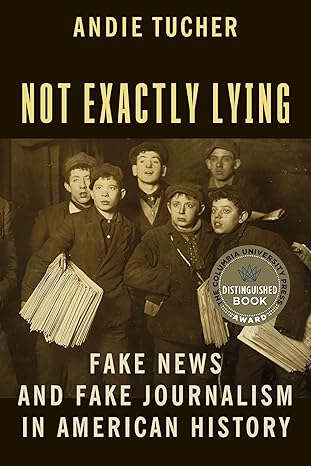
Książka w języku angielskim. Long before the current preoccupation with “fake news,” American newspapers routinely ran stories that were not quite, strictly speaking, true. Today, a firm boundary between fact and fakery is a hallmark of journalistic practice, yet for many readers and publishers across more than three centuries, this distinction has seemed slippery or even irrelevant. From fibs about royal incest in America’s first newspaper to social-media-driven conspiracy theories surrounding Barack Obama’s birthplace, Andie Tucher explores how American audiences have argued over what’s real and what’s not―and why that matters for democracy. Early American journalism was characterized by a hodgepodge of straightforward reporting, partisan broadsides, humbug, tall tales, and embellishment. Around the start of the twentieth century, journalists who were determined to improve the reputation of their craft established professional norms and the goal of objectivity. However, Tucher argues, the creation of outward forms of factuality unleashed new opportunities for falsehood: News doesn’t have to be true as long as it looks true. Propaganda, disinformation, and advocacy―whether in print, on the radio, on television, or online―could be crafted to resemble the real thing. Dressed up in legitimate journalistic conventions, this “fake journalism” became inextricably bound up with right-wing politics, to the point where it has become an essential driver of political polarization. Shedding light on the long history of today’s disputes over disinformation, Not Exactly Lying is a timely consideration of what happens to public life when news is not exactly true.
1 placówka posiada w zbiorach tę pozycję. Rozwiń informację, by zobaczyć szczegóły.
Są egzemplarze dostępne do wypożyczenia: sygn. 008 (1 egz.)
Pozycja została dodana do koszyka. Jeśli nie wiesz, do czego służy koszyk, kliknij tutaj, aby poznać szczegóły.
Nie pokazuj tego więcej